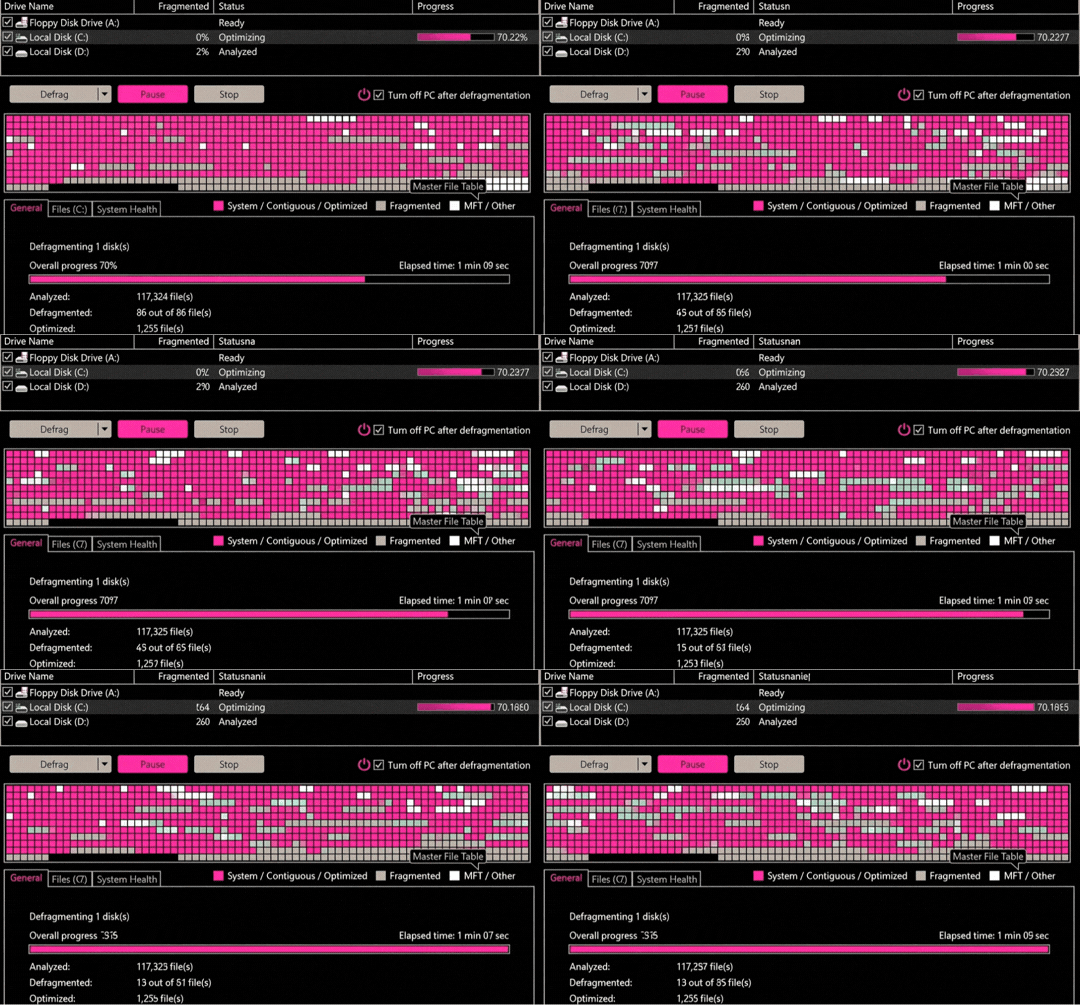
Remember back in the day when you had to defrag your computer? You didn’t have to be a computer expert to know that you had to do it to keep your computer running smoothly. Some of us did it regularly just because there was something oddly relaxing about watching all those colors align as each sector was defragmented. It was our ASMR.
Defragging your computer was not hard. You’d open the tool, hit analyze and watch that grid of colored blocks appear — red fragments scattered everywhere, data pieces living in the wrong neighborhoods, the whole drive working harder than it needed to because nothing was where it was supposed to be.
The fix wasn’t complicated. You hit defrag, waited and watched the blocks slowly consolidate — everything finding its place so the drive would run cleaner, faster, more efficiently.
The reason defragging was so important was because as you added more data to your computer by way of spreadsheets, word documents and photos, your computer would store it all in different places around your computer so each time you had to execute a command, your computer would work harder and it would take longer for your computer to find the necessary data to do even the simplest of things like…open a document.
Your brand has the same problem, and most businesses have no idea it’s happening.
What Brand Fragmentation Actually Looks Like
Brand fragmentation isn’t about having a bad logo or a poorly written website. It’s about inconsistency — the slow accumulation of small mismatches across every digital touchpoint until your brand is essentially saying different things in different places.
It looks like this:
- Your website uses your current logo. Your Google Business listing still has the old one from 2019.
- Your Facebook cover photo uses a tagline you stopped using two years ago.
- Your Instagram bio describes your business one way. Your website homepage describes it differently. Your LinkedIn says something else entirely different, if you even have a LinkedIn business page at all.
- Your brand colors are “close enough” across platforms — a slightly different shade of blue here, a different font weight there.
- Your tone is formal on your website, casual on social, and somewhere in between in your email newsletters.
- You’re not saying the same things about your business across the web.
None of these feels like emergencies in isolation. Together, they create a brand that is fragmented, unpolished and — most dangerously — untrustworthy and unfindable. If you can’t keep your own story straight and “pulled together,” why would any search engine put in the time to find you? More importantly, why would any potential client trust you with their business?
Why It Happens — and Why Nobody Notices
Brand fragmentation almost never happens on purpose. It happens because businesses grow faster than their brand management does.
You set up your Google listing in 2018 when you were just getting started. You built your website in 2021 after you rebranded. You created your Instagram account last year when you finally decided social media was worth the effort. Each of those decisions made sense at the time. Nobody went back to make sure they all said the same thing.
The reason you may not notice it is because you’re too close to it. You know your business. You know what you mean, even when the messaging is inconsistent. Google doesn’t have the time or bandwidth to be concerned about figuring out the context. Your potential clients don’t have that context at all. They’re encountering you for the first time, across multiple touchpoints, trying to piece together a coherent picture of who you are and whether they can trust you.
A fragmented brand makes that harder than it needs to be. And harder means lost business.
Are You Part of The Problem?
Now look away for a second because this part is for the agencies and digital marketing professionals.
Here’s an uncomfortable truth for anyone who builds websites, manages social media, or manages marketing for small business clients: if your client has a fragmented brand and you haven’t told them, that is no bueno.
You probably didn’t cause it. But if you see it and say nothing, you might as well have caused it.
Part of the job — any part of the job that touches a client’s digital presence — is flagging what you find. A client hires you not only for the tangible skills you bring but for your general expertise. If you are building a website for a client and notice that their Google listing is using a logo they stopped using three years ago, they deserve to know. A client who hires you to manage their social media deserves to know that their Instagram bio contradicts their homepage. More importantly, you have an obligation to advise them of the long-term effects of a fragmented brand. It isn’t just an aesthetic issue. As a digital marketing professional working on the digital assets of a client who has fragmented branding, you are effectively not even marketing them, because all your work is for nothing if they still can’t be found.
This is what a real content partner does. Not just execute the brief. Audit the full picture. Find what’s actually broken. Explain it plainly. That’s not scope creep — that’s the difference between a vendor and a strategist. Your client might insist that you leave it as is, but at least when they come back to you in 3-6 months telling you that you suck because they haven’t received a call in those 3-6 months, you can tell them “but I told you so”…but of course, not like that because we don’t want them to feel badly…we want them to feel the delight of new business.
How to Run Your Own Brand Defrag
Okay…welcome back business owners and thank you for that alone time with our digital marketing peers.
In 2026 a brand defrag is particularly important because Instagram has become searchable by Google, search has extended to AI which is even more finicky about brand fragmentation, and if you are a business, you need to be on LinkedIn with a business page.
The good news: a brand defrag isn’t complicated. It’s just methodical. Here’s where to start.
Step 1 — Gather Your Tools
These are the most important branded assets you own and they should all appear exactly the same across all of your branded assets, starting with the footer of your website so that, in particular, your citations all match what is actually appearing on your website.
- Your logo file
- Your exact business name
- Your exact business address (if applicable)
- Your phone number
- Your fax number (if applicable)
- Your business email address
- Your business description
Step 2 — Analyze: Take the Full Inventory
Conduct a Google or Bing search on yourself and list every place your brand shows up online. Website. Google Business Profile. Facebook. Instagram. LinkedIn. Yelp. Industry directories. Anywhere someone might find you, before they find you directly. Don’t skip the ones you haven’t updated in a while — those are usually the worst offenders.
Step 3 — Identify the Fragments
For each touchpoint, check the following:
- Logo — current version and correct colors?
- Business name — spelled and formatted the same everywhere?
- Tagline or descriptor — still accurate and consistent?
- Contact information — same phone number, address and email everywhere?
- Tone and voice — sounds like the same brand across all platforms?
- Visual style — same color palette and general aesthetic?
Step 4 — Consolidate
Now, you dip into your toolbox from step one and simply copy/paste the information from your tool kit into whichever platform you are updating so it all matches exactly across every platform. Repeat this process, one at a time, platform by platform, until the grid is clean.
It’s not glamorous work, but it is well worth the effort especially since it will not ever be this intensive again with just a little bit of consistent upkeep. But when it’s done, everything runs better.
The Defrag Is Not a One-Time Fix
Here’s the thing about defragging a hard drive: you had to do it regularly. Not because the fix didn’t work, but because fragmentation is a natural byproduct of a system in constant use. Think of the internet as the computer and Google as the user trying to find your files. The more fragmented your brand, the harder Google has to work to piece together who you are — Google doesn’t have the time or patience for this and is less likely to surface you when it matters. Every new platform you join, every rebrand, every updated service offering, every new team member who writes a bio adds a little more fragmentation that will need some attention.
The businesses that look polished and trustworthy online aren’t the ones with the biggest budgets. They’re the ones that check their own work. Consistently. Before a potential new client finds the mismatch first. Once you’ve defragged your brand, upkeep is actually simpler because you would just do a search on yourself and defrag whatever search results, including images, don’t look right.
Ready to start defragging your brand?
Download Your Brand Defrag Checklist.
Not Sure Where Your Brand Is Fragmented?
Good content doesn’t happen by accident. Neither does getting found. That’s why the best results happen when you know your business and we know content — working together. When you’re ready — no pitch, just perspective.

 HOOKED UP MEDIA
Leave a comment